
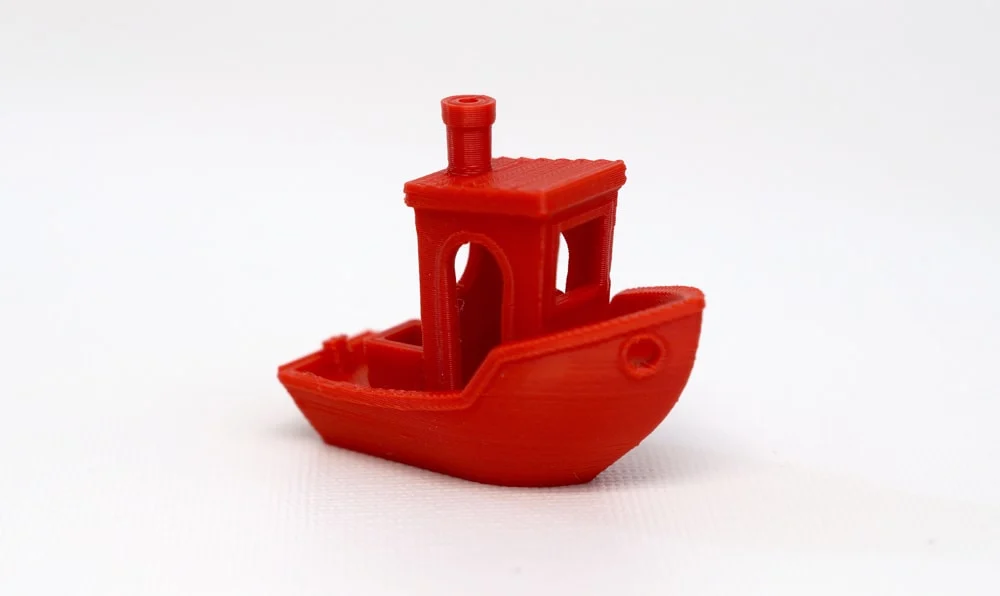
You may have seen a 3D printer before and wondered how it works or why it is useful. While the toys that you can make with a printer, or spare parts, can be fun, the culture of defense could also rest in this tech. The first 3D printer was patented in the United States in 1971, and it took scrap metal and used it as the filament. The history of the 3D printer begins earlier than most people realize. The first recognized 3D printing patent in the United States was granted in 1971 to Johannes F. Gottwald for a device called the Liquid Metal Recorder (U.S. Patent 3,596,285).

This machine used a continuous inkjet-style head to deposit tiny droplets of molten metal onto a reusable surface, building up patterns that could be remelted and reused, essentially an early form of metal additive manufacturing that treated scrap or feedstock metal as the “filament.” Over the next decade and a half, researchers in Japan, the U.S., and Europe developed related layer-by-layer methods, but it was not until the mid-1980s that practical systems emerged, most notably Chuck Hull’s stereolithography (SLA) printer using UV-curable resin (patented in 1986), followed by Carl Deckard’s selective laser sintering (SLS) and Scott Crump’s fused deposition modeling (FDM) around 1988-1989.Let’s say I want to 3D print something in 1987. In practice, you might load a photosensitive liquid resin into an early SLA machine (like Hull’s), then use a computer to slice your 3D model into thin layers. The printer would trace each layer with a UV laser, hardening the resin only where needed, and lower the build platform slightly after each pass so the next layer could be added on top. Alternatively, if you had access to an early FDM or SLS system, you would feed plastic filament or powder into the machine, which would melt or sinter the material along the path defined by your digital model, again building the object layer by layer until the full part was complete.
In 1987, the software stack for 3D printing was extremely limited and tightly coupled to the first commercial machine, the SLA-1 from 3D Systems. The workflow began in a CAD program running on a workstation (often Unix or early Windows/MS-DOS machines), where an engineer would design a part using the CAD tools available at the time, such as early versions of AutoCAD, CATIA, or proprietary in-house CAD systems. That CAD model was then exported or translated into the new STL (Stereolithography) file format, which 3D Systems and its partners introduced specifically for stereolithography in 1987 to describe the object’s surface as a mesh of triangles. The STL file was then imported into 3D Systems’ own stereolithography control/slicing software, which mathematically sliced the model into thin horizontal layers and generated the laser path and exposure parameters for each layer. This software also handled machine setup: choosing resin type, layer thickness, laser power, scan speed, and support structures, then sending the resulting instructions to the SLA-1’s controller to drive the UV laser and build platform. Practically speaking, a user in 1987 would not have a single “click-to-print” app like today. Instead, they worked with a small chain of specialized programs: a CAD design tool, an STL exporter/converter, and the SLA machine software that performed slicing and machine control. The slicing step was crucial.
The software took the 3D surface description in the STL file and computed a series of 2D cross-sections, then turned each cross-section into commands for the UV laser to trace on the resin vat, lowering the platform by a fraction of a millimeter after each layer. Because hardware and materials were so new, much of this software was proprietary, ran on expensive engineering workstations, and required significant operator knowledge to tune parameters like cure depth, overlap, and support geometry to avoid warping or failed prints.On a much larger scale, Divergent is doing that with its machine, aiming to cut the cost of cruise missiles by 10 and to improve the production time. Per Axios, the finished missiles, including parts from other contractors, run 200,000 to 500,000. Legacy standard missiles range from $2 million to $6 million each. While cruise missiles are not used to shoot down drones, this tech could be used to make much cheaper, smaller missiles that would be important for drone defense, as I’ve reported a few weeks ago is a major problem in the United States.
Like the first 3D printers that came before it, this is not plastic.

Divergent does not use plastic. They use metal in it. The Monolith One is a 3D printer which prints with aluminum, nickel, steel, and titanium alloys. The problem is the tolerance in 3D printing is too high and can be affected by weather, meaning it is harder to replicate to the precision required in multiple locations. However, active thermal control is part of the answer. The system utilizes custom build plates with specialized heating and cooling controls that regulate temperatures up to 200°C. To help regulate the tolerances. God bless and Tech talk to you later.
Leave a Reply