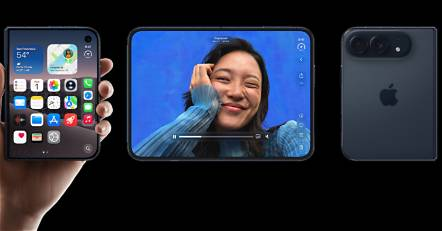
Apple just did something that feels distinctly “anti-Apple.” Since 2017, Apple’s primary authentication method for its flagship phones (excluding the iPhone 8 and SE models) has been Face ID. However, Apple’s most ambitious device yet, the foldable iPhone Duo, originally shipped with a Touch ID fingerprint scanner, leaving out the dedicated infrared sensors required for true Face ID.

To understand why that matters, it helps to look at how the two technologies differ. Standard Face ID projects an infrared dot pattern to map your face in 3D, whereas 2D camera-based face unlock, like the option Samsung has offered for years, san their experiment with the iris scanners on the Note 7-9 models, relies on standard photo matching, making it far less secure.
Well unless you are upgrading from an iPhone 8 or an SE to the Duo you have been with a Face ID for nearly a decade so Apple relented and added a less secure face unlock on the iPhone Duo cameras. Of course filling out passwords or Apple Pay will still require fingerprint scanner. Apple has finally relented, introducing a software-based face unlock feature that uses the Duo’s outer front camera. Because it lacks true Face ID hardware, Apple is keeping strict guardrails in place: sensitive actions like autofilling passwords and authenticating Apple Pay still require your fingerprint.
Instagram Edits Finally Adds Audio Waveforms
Instagram’s standalone video editing app, Edits, just received a major update that brings a feature creators have been clamoring for: audio waveforms. Having a visual waveform on the timeline makes editing significantly faster and more precise, allowing you to instantly see where dialogue, beats, and sound effects start and stop without endless scrubbing.

Motorola Prepares for a Massive Flagship Launch with the Signature 27
Hellooo, Moto!! Motorola is gearing up for one of its biggest smartphone launches yet with the Motorola Signature 27. While its oversized rear camera module won’t win every beauty contest, the only people staring at the back of the phone will be the ones you’re taking pictures of.
Under the hood, the Signature 27 is built for serious longevity and heavy workloads:

- Performance & Software: Launching with Android 17 and Qualcomm’s Snapdragon 8 Elite Extreme Gen 6 processor, the phone should breeze through demanding tasks like mobile video editing. Better yet, Motorola is backing it with a seven-year software update lifespan, giving that high-end silicon plenty of room to age gracefully.
- Camera System: The rear array packs a versatile triple-camera setup consisting of a 50MP main wide camera, a 50MP ultrawide lens, and a 200MP 3x periscope telephoto camera capable of cropping in for up to 100x Super Zoom which sadly does not have the extra cameras that Samsung had on its devices so I would like to see the true quality of this ‘zoom’.
- Battery & Storage: One of the most exciting specs is the massive 7,000 mAh silicon-carbon battery, paired with 512 GB of internal storage. On the downside, enthusiasts will have to live without a headphone jack or a microSD card slot for expandable storage.
The phone should also support Motorola’s competitor to Samsung’s Dex, Ready for. God bless and Tech Talk To You Later!!!
Leave a Reply